
For Shaquille, earning his degree wasn’t just about career advancement. It was about reclaiming a dream that once felt out of reach. He first started college in 2011, right after graduating from high school. Things were going well until life took a difficult turn. When his grandmother, his primary guardian, passed away, everything changed. “Depression hit, housing became unstable, everything kind of just came crashing…My education became the last priority,” he recalls.
Years passed before Shaquille found his way back to higher education. It was during the height of the COVID-19 pandemic that he had a moment of clarity: “I remember thinking, is this really what I want to be doing for the rest of my life? And the answer was no.” That question reignited his ambition. He enrolled at Cambridge College, and later transferred to Lesley University to study psychology and social work. However, financial barriers stood in the way at Lesley University. “Financial aid was only covering two classes a semester, and I was still working full time throughout the pandemic just trying to pay bills,” Shaquille explains. He decided to reduce his course load to address the financial hardship. However, he realized it wasn’t financially sustainable and sought additional support.
A staff member at Lesley encouraged him to apply to the Alray Scholars Program multiple times, so he finally took their advice. Through Alray, Shaquille received the support he needed to complete his degree. “The scholarship allowed me to take more classes,” he says. “Instead of taking two classes a semester, I was able to go full time to four, which helped speed along the process.” Alray even helped him pay for prior learning credits, a challenging process that enabled him to earn credit for his professional experience in mental health, which helped accelerate his path to graduation
The mentorship component proved to be just as meaningful. Shaquille was matched with Ed, who became a steady source of guidance and encouragement. At first, he admits he wasn’t sure how he could help since Ed had no experience in the mental health field. “I realized that it was less about what he could teach me and more about the validation and support that I needed, especially when I was dealing with stuff like imposter syndrome and balancing working two jobs while going to school full time,” he shares. “He taught me how to really utilize the skills that I have, and how to advocate more for myself within the sphere of higher education, or if I was having issues with communicating with my professors, which at that point I wasn’t really used to…Talking things out with Ed definitely had a lot to do with my success.” Ed also helped Shaquille with things like resume building, graduate school essays, and applications. “He definitely went above and beyond in helping me make sure that I was in the best position possible when I graduated, especially applying to grad schools.”
Shaquille’s decision to study psychology wasn’t just an academic decision — it was deeply personal. Having grown up navigating his own mental health challenges, he understood the importance of mental health firsthand. “There aren’t a lot of people who look like me in this field — queer men of color, especially in Boston,” he says. “I wanted to showcase representation for others, and be a mentor for individuals of color who want to pursue that field but don’t have someone who’s been there, who’s walked that path before.” That motivation carried him through late nights, self-doubt, and every paper written along the way. “Graduating with honors definitely felt like a victory,” he says. “I never thought it would be possible.”
When Shaquille looks back, what stands out most about Alray is the genuine care and sense of community. “I felt like there was always someone to rely on. There was always someone checking in on you. It made me feel safe in my academic journey — I could be honest when I was struggling and not have to worry that my scholarship would be taken away.”
With his bachelor’s degree in psychology and a minor in social work complete, Shaquille immediately took the next step and enrolled in Johns Hopkins University’s Clinical Mental Health Counseling master’s degree program. His goal: to become a licensed therapist and eventually return to Alray as a mentor. “I’d love to come back and be that support for someone else,” he says. “Especially for those who come from inner cities like Boston, who struggle with the idea of higher education being a tangible thing.”
That belief in what’s possible drives him to share Alray’s mission with everyone he knows. “I’ve told my brother, my best friend—pretty much anyone thinking about going back to school,” he says with a laugh. “I’ve been spouting it to everyone I can who’s wanting to go back to school, because I know what is possible when you have that support system backing you up.”
Shaquille’s story was captured and written by Julianne Stein.
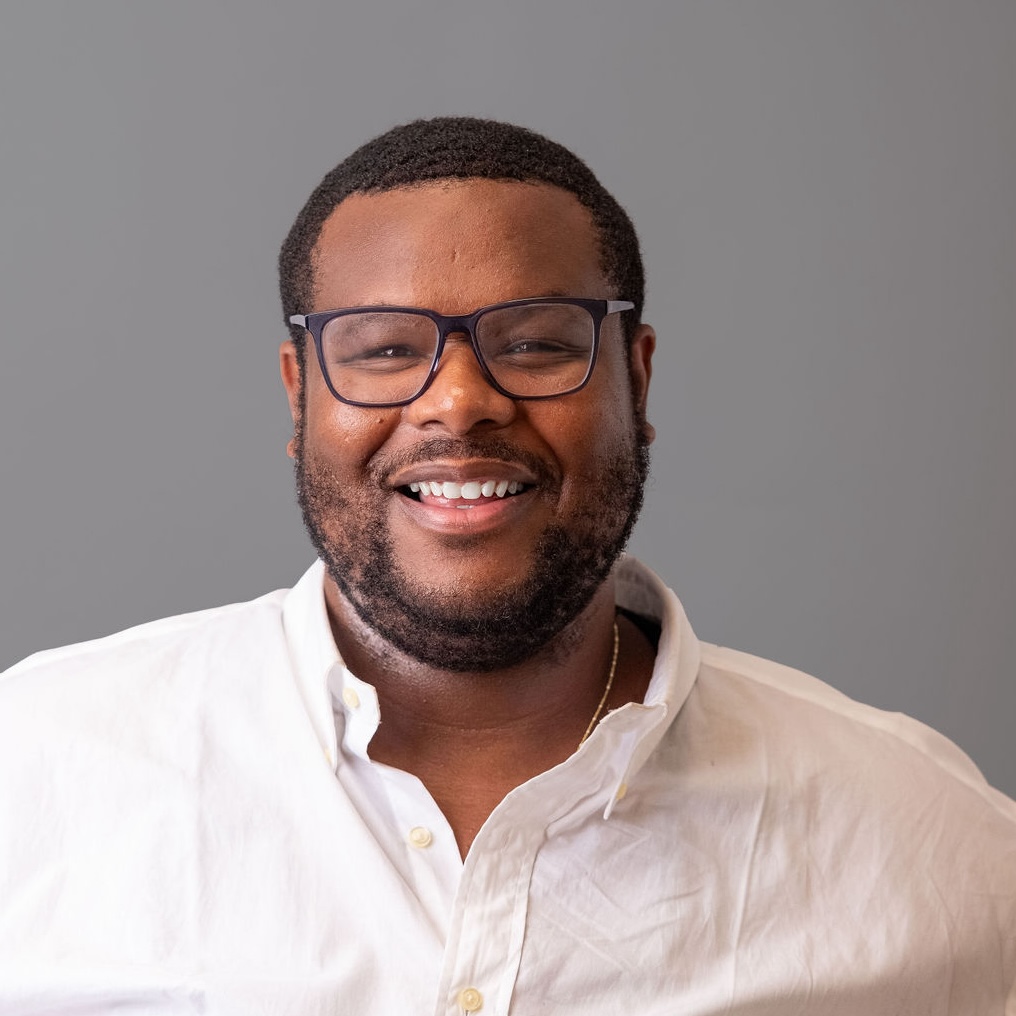
“The scholarship allowed me to take more classes. Instead of taking two classes a semester, I was able to go full time to four, which helped speed along the process.”